AI-Driven Demand and Memory Shortages
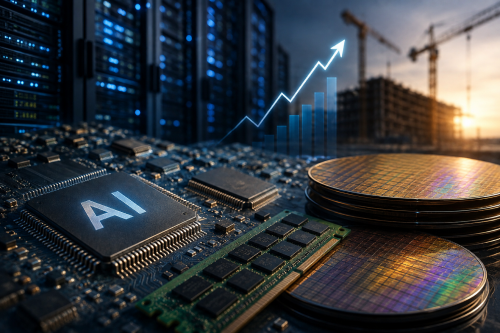
Artificial intelligence is driving an unprecedented surge in demand for hardware components, particularly memory chips. Global semiconductor manufacturers have fully booked 2027 DRAM production as AI infrastructure development consumes industry output. Tech giants and cloud providers have signed multi-year contracts, leaving minimal unallocated capacity worldwide.
Memory chipmakers such as Samsung, SK Hynix, and Micron are experiencing a dramatic shift in their supply chain strategies. Micron Technology has seen its shares rise over 692% in the past year, reflecting the strategic importance of memory in the AI era. However, the market remains volatile, with shares currently trading below $900 despite strong fundamentals.
Hardware Shortages and Rising Costs
The surge in AI-driven demand is also causing shortages of essential computer components. Manufacturers are prioritizing AI capabilities, leading to a reduced supply of mainstream components. This has caused monthly contract prices to increase by 20% to 60% across major categories.
Triple-level cell (TLC) memory, a key component in NAND flash storage, has been particularly affected by high demand. This shortage is forcing builders and consumers to rethink their hardware choices, as noted by industry analysts.
Expanding Data Centers and Equipment Sales
Data center construction is accelerating as AI infrastructure expands. Massive datacenter buildouts are ongoing, with power grid constraints becoming a significant bottleneck. Stargate One in Abilene is operational with eight additional buildings under construction, and five more sites have been announced.
Global sales of semiconductor production equipment are also on the rise. Sales of chip production equipment will reach $156 billion by 2027, with China, Taiwan, and Korea leading the demand.
Future Outlook and Market Predictions
Looking ahead, the AI hardware market is expected to grow at a compound annual growth rate (CAGR) of 24.6% from 2024 to 2029, reaching a market size of USD 94.67 billion.
Analysts also predict that companies like Taiwan Semiconductor Manufacturing (TSMC) and Broadcom may join the $4 trillion market cap club by 2028.